Do Raw Vegans Need Supplements?
Do Raw Vegans Need Supplements?
Real Talk on B12, Vitamin D, Food Combining and Longevity
During the Ultimate Raw Vegan Bundle launch week I jumped on a live with the wonderful Raw Chef Yin over on her Instagram channel. Yin came in with some genuinely great questions that she had been sitting on for a while, the kind that come up again and again in this community and deserve a real, nuanced answer rather than a hot take.
We covered B12, vitamin D, food combining, and whether calorie restriction is the secret to longevity on a raw vegan diet. Below is the expanded version, drawing on key points from my book The Model Diet where relevant, so you have something to come back to and share.
The Bundle Is Live and It Is Stacked
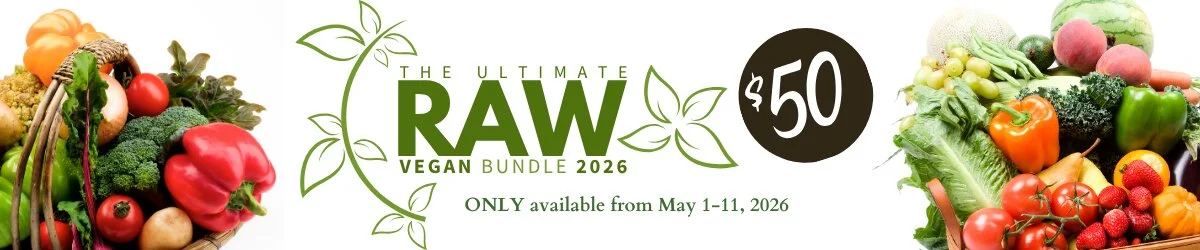
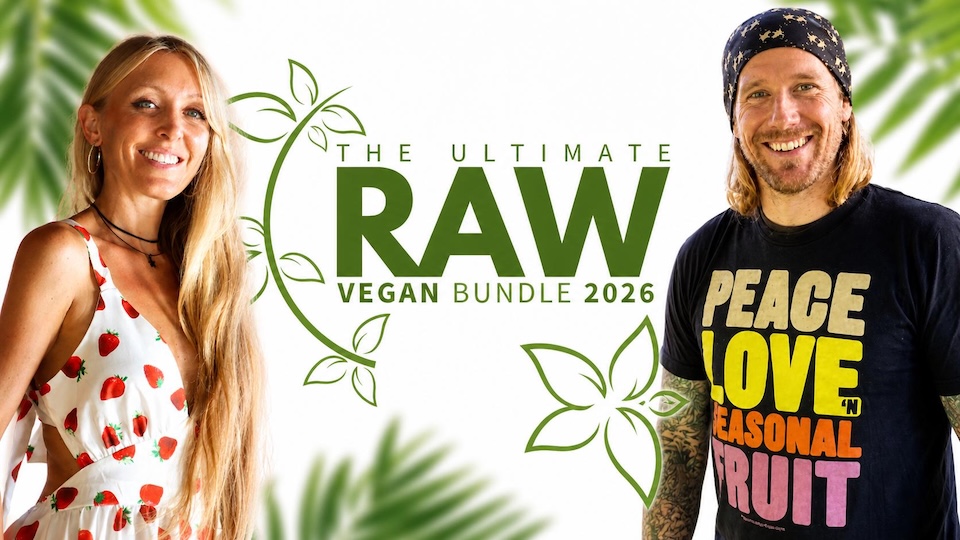
Before we get into the good stuff, if you found this post through the live or through a search and you have not checked out the Ultimate Raw Vegan Bundle yet, now is the time. It runs until May 11th and includes over 30 brand new resources from raw vegan creators all over the world. My book The Model Diet is in there along with the 80/10/10 Masterclass I built with Dr. Douglas Graham, which runs over 17 and a half hours and will go to its regular price of $747 after the bundle closes.
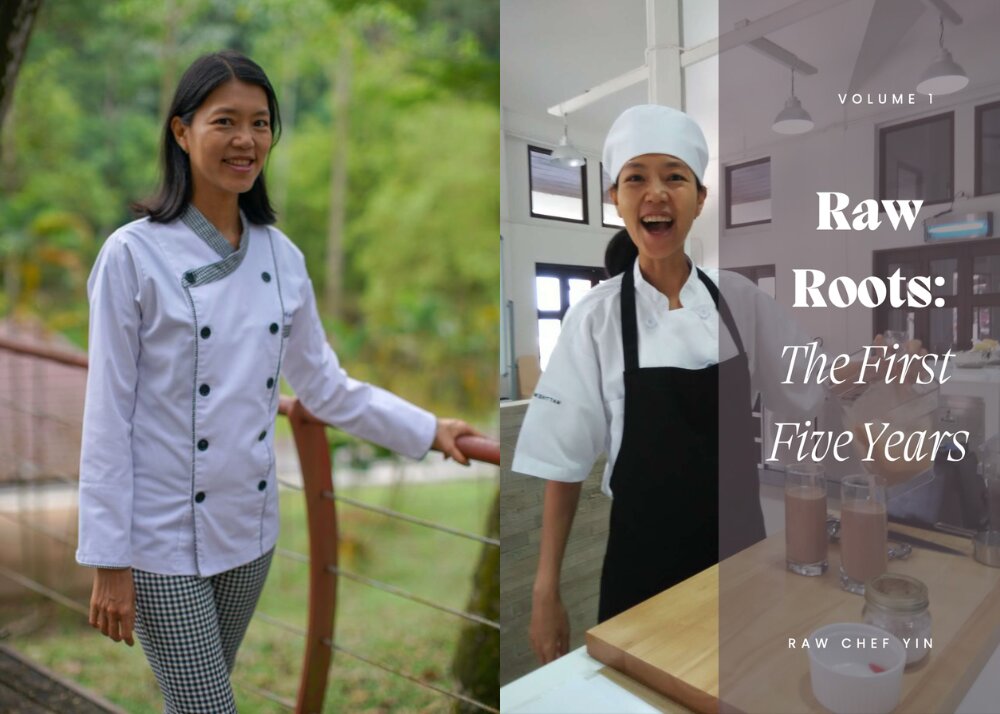
Yin’s awesome insightful new book Raw Roots Volume One is in there too, and there is a collaboration comfort food raw recipe ebook that you genuinely cannot get anywhere else. All of it for $50 US.
Do Raw Vegans Need Supplements? Starting with B12
This is probably the question I get asked most often, I even did a in depth video on it in the past from a differnt angle called “Vitamin B12 Deficiency, Is it a Joke?” and it is also the one with the most misinformation swirling around it right now. So let me be real with you the way I was with Yin on the live.
My first decade on a raw food diet I was supplement free and genuinely proud of it. I felt great and I thought that was proof enough. Until I really wasn’t feeling great. The brain fog crept in. My ability to handle stress dropped. I was blowing up at the smallest things. I had been getting annual blood panels in Canada and what I saw over those years was my B12 going steadily down until it hit 82, which in many countries is considered severely clinically deficient. When I finally supplemented, things improved in short order. That is personal experience backed by lab work, not philosophy, and I and other knowledgable practitioners have seen it again and again.
So when people say do raw vegans need supplements and then answer with “B12 is a scam,” what they are usually doing is looking at serum B12 levels in isolation, which genuinely is not the full picture. Serum B12 alone does not show you functional B12 status. What you actually want alongside that is a methylmalonic acid test (MMA or urinary UMMA) and a homocysteine check. Those tell you whether B12 is actually working in your body, not just floating around in your blood. You can have adequate serum B12 and still be functionally deficient if absorption is compromised.
The cyanide concern around cyanocobalamin also comes up a lot and I address it directly in The Model Diet. One apple seed contains roughly 8 to 10 times the cyanide of a typical B12 pill and in a more bioavailable toxic form, depending on the dose and apple variety. One teaspoon of flax can have upto to about 87 times the amount. The body actually produces cyanocobalamin as a detox product for free cyanide, and the well established principle in toxicology is that the dose makes the toxin. Trace amounts of compounds that are harmful in large quantities often play neutral or even beneficial roles in normal biological function. The dose makes the toxin. This is not a reason to fear a B12 supplement.
There are multiple forms: cyanocobalamin is the most shelf stable and least expensive, methylcobalamin is widely recommended, and a methylcobalamin and adenocobalamin combined supplement covers more bases. Dosing differs by form so follow the directions on the bottle rather than a blanket number. And if you are really deficient, a short period of higher dose followed by a maintenance dose is common. For the full breakdown of types, testing markers and what to watch for symptom wise, it is all in The Model Diet.
Bottom line on whether do raw vegans need supplements when it comes to B12: it is not a raw vegan issue specifically, it is widespread across all diets. A well balanced raw vegan diet can genuinely improve your microbiome and absorption over time, which gives you the best chance of maintaining good levels naturally. But ignoring symptoms because of a philosophical stance is not wisdom, it is a risk. I have met people with permanent neurological damage from waiting too long. That is not something anyone needs to go through.
Vitamin D: Do Raw Vegans Need Supplements Here Too?
Yin’s blood work came back with insufficient vitamin D even though she is in Malaysia, walking outside every morning. Her doctor pointed out what is actually a really common blind spot: early morning sun, even near the equator, passes through more atmosphere at that angle, which blocks the UVB rays responsible for vitamin D production. Closer to solar noon is when those rays are most direct and most effective, even if it is only for 15 minutes.
So do raw vegans need supplements for vitamin D? My honest answer is that sun is always my first choice, and I have a whole post on this with four different approaches ranked by preference. Supplements are actually last on my list, not because I am against them, but because there are genuinely enjoyable ways to get it first. Sun exposure at the right time of day is the most natural. Mushrooms placed in afternoon sun for a few hours become a meaningful source of vitamin D2, which is a nice whole food option. I use a vitamin D lamp here in Sweden during the darker months. And then yes, supplements as a backup when the other options are not available.
The difference between D2 (from plants and fungi) and D3 (what our skin produces from sun exposure) is worth knowing. D3 has a longer half life in the body and is generally considered more effective at raising levels. Neither is a scam. Both are real. And adequate vitamin D levels touch so many biomarkers, from immune function to bone health to mood, that it really is worth paying attention to regardless of how sunny your climate feels.
Skin tone, elevation, time of year and how much skin you are actually exposing all affect how much you are producing. There is no single blanket recommendation that covers everyone, which is why awareness matters more than a rigid rule here.
Food Combining: Tool Not Religion
Yin admitted she mostly ignores food combining because it feels complicated, and honestly I get it. I spent the first five years of my raw food journey so rigid about it that watching other people not food combine would give me a stomach ache. That is not a healthy relationship with food or with other people.
Here is how I think about it now. Food combining is a tool for optimal digestion, not a pass or fail test. And on a fruit and greens based raw diet it is genuinely much simpler than the classic books make it seem.
Leafy greens combine well with everything. For fruits, the simplest shortcut is to mix foods that are similar in water content and similar in predominant taste. Sweet with sweet works. Sweet with very sour is where you start to notice things. Similar water content matters too, which is why bananas and watermelon together can feel a bit off even though both are sweet.
Amounts matter. A banana heavy smoothie with one orange thrown in is usually fine. Half and half is where I personally notice it. And if someone has been overburdening their digestion consistently for a long time, their system may have stopped signaling discomfort, which does not mean everything is running optimally, just that the feedback loop has been dulled.
If you have compromised digestion or any digestive disorder, tightening up on food combining principles is going to give you noticeably better results. As your digestion strengthens you naturally get more flexibility. The goal is always getting more out of less digestive effort so your energy goes toward living rather than processing.
Calorie Restriction and Longevity on a Raw Vegan Diet
A question came in during the live about replacing dates to keep calories low, referencing Dr. Fuhrman’s nutritarian approach and the idea that calorie restriction extends lifespan. I want to be clear that I respect Dr. Fuhrman and the nutritarian approach is genuinely wiser than most approaches out there. But this is a case where the clientele makes a big difference in the conclusions drawn.
Most mainstream vegan doctors, even excellent ones, are working with people eating processed vegan foods, seed oils and high omega 6 diets. Their data on things like omega 3 conversion rates reflects that population. Dr. Rick and Karen Dina, who are both in the bundle with their detoxification mini course, work primarily with whole food raw foodists and have been doing so for over 30 years. What Dr. Rick has consistently seen in his practice monitoring clients is that when the omega 3 to 6 ratio is naturally balanced through a whole food fruit and greens diet, the conversion from short chain to long chain omega 3 is much more predictable and consistently shown to be adequate. That is a very different starting point.
On calorie restriction specifically: the research models are done on animals eating concentrated, unnatural diets. Comparing that to a raw food diet where the biggest challenge most people face is eating enough calories consistently is not comparing like with like. Dr. Rick and Karen frame it better as caloric optimization, getting enough, not restricting. One of the most common reasons people struggle long term on a raw food diet is chronically under eating, which leads to low energy, cravings, reaching for heavier foods and eventually deciding the diet does not work.
Abundance on a raw food diet is a feature, not a problem. Because raw foods are so water rich and calorically dilute, you genuinely need volume to meet your needs. Restricting that volume to chase a longevity metric designed for a completely different dietary context is working against yourself.
In 22 years of doing this and almost 17 of coaching people, I have never seen a genuinely well balanced holistic raw food diet fail someone. What I have seen is people who thought they had every box checked when a few key ones were actually missing, sunshine, B12, enough sleep, enough calories, enough emotional ease around food, or not actually wanting to live the lifestyle but feeling they should. Looking to our weakest links, digging in with those that have the results you want and learning from them, that is where the real balance comes from.
Thank You Yin, and Go Grab the Bundle
A big thank you to Raw Chef Yin for bringing these questions and for having me on her channel. These are the conversations that actually move things forward in this community and I always enjoy going deep on the stuff that matters. Check out her book Raw Roots Volume One inside the bundle and follow her on IG at @rawchefyin and her YouTube @rawchefyin or more.
For a much deeper dive into all of these topics, including the four pillar framework I use to evaluate nutritional claims, the full B12 breakdown, the vitamin D hierarchy, and the real approach to longevity on a low fat raw vegan diet, it is all in The Model Diet. Grab it along with everything else in the bundle here before May 11th.
As Always
Wishing You Much
PeaceLovenSeasonalFruit ck