Raw Food Myths Debunked: Fruitarian Diets, Fat, and Detox Explained
Raw Food Myths Debunked: Fruitarian Diets, Fat, and Detox Explained
I recently had a really fun lively chat with my friend Michael over at The Abundant Yogi on his YouTube channel, and we dove deep into some of the most common raw food myths floating around the community right now. If you’ve been anywhere near the raw vegan or holistic health space online, you’ve probably run into some of these yourself. Some of them are ones I struggled with early on. Some of them I’ve watched cause real harm to real people over my 21+ years living this lifestyle and 16+ years coaching.
I’ve been sitting on a lot of this material for a while, and I’ll be honest, I’ve had some hesitancy about putting it out there. I don’t love drama. I don’t love being divisive in a community that’s already pretty small. But at some point, keeping it in was doing more harm than good, and that’s a big part of why I finally wrote Raw Truths: Exposing the Top 10 Myths Sabotaging Your Raw Food Journey.
More on that below.
For now, let’s get into what Michael and I actually talked about, because it was a good one.
Why I Finally Started Addressing Raw Food Myths Head-On
The short version: I’ve seen these raw food myths cause harm more and more over the years, especially as social media has expanded and sensational claims go viral way faster than grounded, evidence-based ones. Fantastic claims get more clicks. Wishful thinking spreads fast. And a lot of people who come to this lifestyle are genuinely desperate, or genuinely open to conspiracy-adjacent thinking because they’ve already had their eyes opened to how backwards mainstream nutrition culture can be. I get it. I’ve been there. But that openness can sometimes lead people into really problematic territory.
So I started putting out more videos on some of these topics, and I’ve had a whole backlog of content I’ve been sitting on. When the opportunity came to put it all together into a book, I went for it. And the feedback so far has been overwhelmingly positive. People are saying things like “you saved me so much stress” and “this all makes so much sense, I wish I’d read it years ago.” That’s exactly what I was hoping for.
If you want to get the full picture, grab the Raw Truths book here. But let me walk you through a few of the big ones we covered in the conversation with Michael.
📗 Raw Truths: Exposing the Top 10 Myths Sabotaging Your Raw Food Journey

My first full-length information-based book, covering the most common and most harmful raw food myths in the community, backed by evidence, real coaching experience, and 21+ years of living this lifestyle.
The Mucoid Plaque Myth
This one generates the most pushback of pretty much anything I’ve ever put out, which tells you a lot. One of the most widespread raw food myths going is the idea of mucoid plaque, the concept that there’s a thick, rubbery layer of old waste coating your intestinal walls that you need to “cleanse” out with special protocols.
I’ve done a deep-dive video on this with some seriously credentialed people in the fasting and raw food world, including Dr. Alan Goldhamer, who has supervised water fasts for over 40,000 people at the True North Health Center; Dr. Areli, a high-raw pathologist who has been a part of over 200 autopsies of sick people, dissecting and analyzing at a cell-sized level the entire digestive tract; and Dr. Doug Graham, a near 50-year raw vegan educator and fasting coach who is often considered the father of the modern fruit-based raw diet—someone I’ve been fortunate enough to call a friend and mentor since meeting him in 2004. I’ve also talked with over two dozen doctors, experts, colon hydrotherapists, fasting, and juice fasting experts, etc., in depth, casually researching this topic for around 20 years. These are not people who are “in the pocket of mainstream medicine.” These are people with more collective fasting and raw food experience than almost anyone on the planet.

👉 Watch my full Mucoid Plaque Myth Debunked video and blog post here.
It goes way deeper than I can in this post, and I really encourage you to watch the whole thing before drawing conclusions either way.
The key thing I said in our chat with Michael, and I’ll say it again here: I understand why people believe this. When you go through a challenging protocol and something comes out, you want to believe it was worth it. Identity gets wrapped up in this stuff. Businesses get built around it. I’m not here to shame anyone. I’m here because I’ve seen people harmed, and I think they deserve better information.
Food Combining, Fat and Fruit: Is It Really That Simple
Another one of the persistent raw food myths is around food combining, specifically the idea that you can never, under any circumstances, mix fat with sweet fruit. Michael asked me specifically about chia seeds, flaxseeds, and hemp seeds in smoothies, which is a really practical, real-world question.
Here’s the nuanced truth: food combining principles were originally developed not specifically for digestion, but as a weight loss tool, by limiting caloric density in any one meal. There are real physiological truths embedded in those ideas, things like how acids in the mouth inhibit salivary amylase and slow carbohydrate digestion. But the “never mix fat and fruit, ever” version is one of those raw food myths that turns something nuanced into a black-and-white rule that doesn’t hold up.
Sweet fruit does move through the stomach faster than fat. When you combine the two, the fruit gets held up a bit, which can reduce digestive efficiency and increase fermentation. For someone with blood sugar issues or compromised digestion, minimizing that combination makes sense. But the idea that a tablespoon of hemp seeds in your banana smoothie is going to cause a health crisis? That’s an oversimplification.
Context matters: how much fat, how much fruit, your current metabolic health, your fitness level, whether you’re including vegetables. Durian is both a sweet fruit and a fatty fruit simultaneously, and I don’t hear anyone saying you shouldn’t eat durian. The reality is always more nuanced than the viral version.
The Fat Myth: Is More Fat Better? Is No Fat Better?
This one goes in two directions, and both extremes are problematic raw food myths. On one side, there’s the idea that more fat is always better on a raw diet, that you should be getting most of your calories from avocados, nuts, seeds, and oils. Dr. Graham has covered this extensively in his work, and it just isn’t upheld by nutritional science, sports science, or what we see in the animals most similar to us. I’ve seen people fall off raw food entirely because their high-fat approach left them feeling sluggish and unwell, and they blamed the diet instead of the fat ratio.
On the other side, there’s the idea that if low fat is good, then zero fat must be better. That also isn’t true. We have a genuine physiological need for fat. If you’re eating mostly tropical fruits rich in omega fatty acids, like mangoes, papayas, and durian, you can meet a lot of that need naturally. But a strictly no-fat approach over the long term, no avocados, no nuts and seeds, no fatty fruits, hasn’t shown advantages in practice, and I’ve seen it lead to real insufficiencies: lost hair, lost muscle mass, tooth issues, mood problems.
These are raw food myths that have real consequences. Moderation and nuance aren’t as exciting as absolutes, but they’re a lot more honest, and in 16 years of coaching I’ve seen the difference clearly.
The Fruitarian Myth: Philosophy vs. Physiology
This is one I approach with a lot of care because I genuinely love the Fruitarian community and don’t want to be divisive. But it wouldn’t be fair to leave it out of a post about raw food myths, because I’ve seen too many people harmed by applying a fruitarian philosophy without understanding the physiological limitations.
Here’s the core issue: the appeal of a fruitarian diet is primarily philosophical, not physiological. Fruit is incredible. It’s our most natural, most perfectly designed food in many ways. If I were restricted to one food group for the rest of my life, fruit might be the best pick. But that’s very different from saying that voluntarily excluding every other food group is optimal.
Botanically, a “fruitarian” diet can actually include cucumbers, tomatoes, zucchinis, bell peppers, almonds, and other seeded foods, which most people would just call vegetables. When Fruitarians include those foods, they can do reasonably well. But the narrow version, only sweet fruit, just doesn’t align with what nutritional science, anatomy, physiology, or even our closest animal relatives suggest is optimal. We’re described as frugivores, not fruitarians. And no other primate eats exclusively fruit.
One thing I mentioned to Michael that I think is really important: when you eat very lightly for long enough and then try to reintroduce other foods, your body has adapted to that lighter load. The indigestion or discomfort you feel isn’t confirmation that those foods “aren’t meant for you.” It’s your digestive system having to rebuild capacity. That feedback loop can keep people on an increasingly restricted path that ends up in genuinely poor health outcomes.
If you want to explore this more, this is one of the chapters I go deepest on in Raw Truths.
The Blood Type Diet
We touched on this briefly and it’s worth mentioning because it’s a textbook example of how these raw food myths (and diet myths in general) spread. The blood type diet sold enormously well because it told certain groups of people that their existing habits were scientifically justified. Type O? Congratulations, you’re an alpha hunter and you need meat. The problem: there is no science behind it. None. Animals with multiple blood types don’t have different diets. The results people see from the blood type approach come from simplifying their diet and cutting out processed foods, not from matching their blood type to their meals.
Diet books are basically the least regulated space in publishing. Anyone can say anything. That’s why doing your own research, with an open mind and a willingness to look beyond confirmation bias, actually matters. This is one of the bigger misinformation patterns I see across the whole holistic health world.
A Big Thank You to Michael at The Abundant Yogi
I genuinely love the conversations I get to have with Michael. He’s thoughtful, he asks real questions, and he creates a space where nuanced topics can actually breathe. If you’re not already following him, check out The Abundant Yogi on YouTube. He’s an internationally certified Iyengar Yoga teacher, the first certified Anusara Yoga teacher in Toronto, and a Certified Regenerative Health Professional, and his channel covers yoga, holistic health, plant-based living, and conscious fitness in a way that’s grounded and genuinely worth your time.
We’ve done a couple of conversations now, and each one I leave feeling grateful for the exchange. Make sure to check out his previous interview with me too if you want more background on my story, how I got into raw food, where I came from, and how The Raw Advantage came to be.
You can watch the full version of this conversation here:
[Embed: Raw Food Truths with Chris Kendall | Fruitarian Myths, Fat & Detox Explained – The Abundant Yogi]
The Raw Vegan Lifestyle Success System Is Back
Since Michael was kind enough to bring it up during our chat, I’ll mention it here too: my Raw Vegan Lifestyle Success System is relaunching as a group course. This is the most comprehensive thing I’ve ever put together, a 10-week program covering the physical, emotional, social, spiritual, and intellectual dimensions of this lifestyle, because understanding the raw food myths is only part of the picture. Actually living this long term is another thing entirely.
The course includes 12 bonus “free” live group Zoom calls ($600 value), all four of my 21 Day Seaosnal Meal Plans (an $80 value on their own), 2 of my major recipe ebooks, “101 Frickin Rawsome Recipes” and my newly updated “TRA Retreat Treats” ebook (an $30 value), as well as my Raw Truths ebook ($20 value).
That’s $730 of bonuses on top of the course itself!
There’s also a 90-day no-risk guarantee: if you do the work and don’t feel it was valuable, I’ll either refund you or offer free coaching to get you to your goals.
Use code 50off for 50% off, this is the biggest discount I offer!
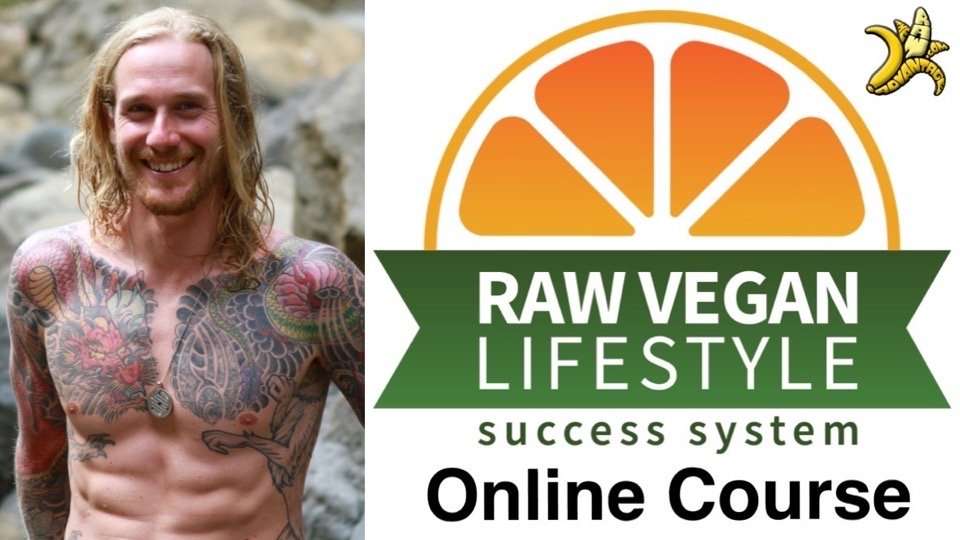
→ Learn more and join the Raw Vegan Lifestyle Success System here
Critical Thinking Is Part of the Lifestyle
One of the things I love most about the conversation with Michael is that we both come from a place of, do your own research, but actually do it. Don’t just confirm what you already believe. Look at the full picture. Be willing to update your views when the evidence calls for it. And be kind in the process, because the people caught up in raw food myths aren’t bad people. Most of them are just trying to find their way to better health and got handed some inaccurate information along the way.
These raw food myths matter not because I want to win arguments, but because people deserve to have access to grounded, honest information so they can make choices that actually serve their health long term. That’s what Raw Truths is about. That’s what 16 years of coaching has taught me. And that’s what keeps me going.
Raw Truths, and come say hi on Instagram or YouTube if you have questions.
As Always
Wishing You Much
PeaceLovenSeasonalFruit ck